
Evidence before action
Our Approach
Better organizational decisions begin with better evidence. Current reality is clarified with leadership teams before change is recommended.
Clarity before action.
Organizations improve execution when stakeholders share a clear view of what is known, what remains uncertain, and which conditions are influencing performance. The sequence draws on human performance technology, systems thinking, and performance analysis: evidence is evaluated before conclusions are reached, and conclusions are validated together before recommendations are made.
Shared understanding strengthens alignment. This disciplined sequence reduces premature solutions and helps organizations move forward with confidence.
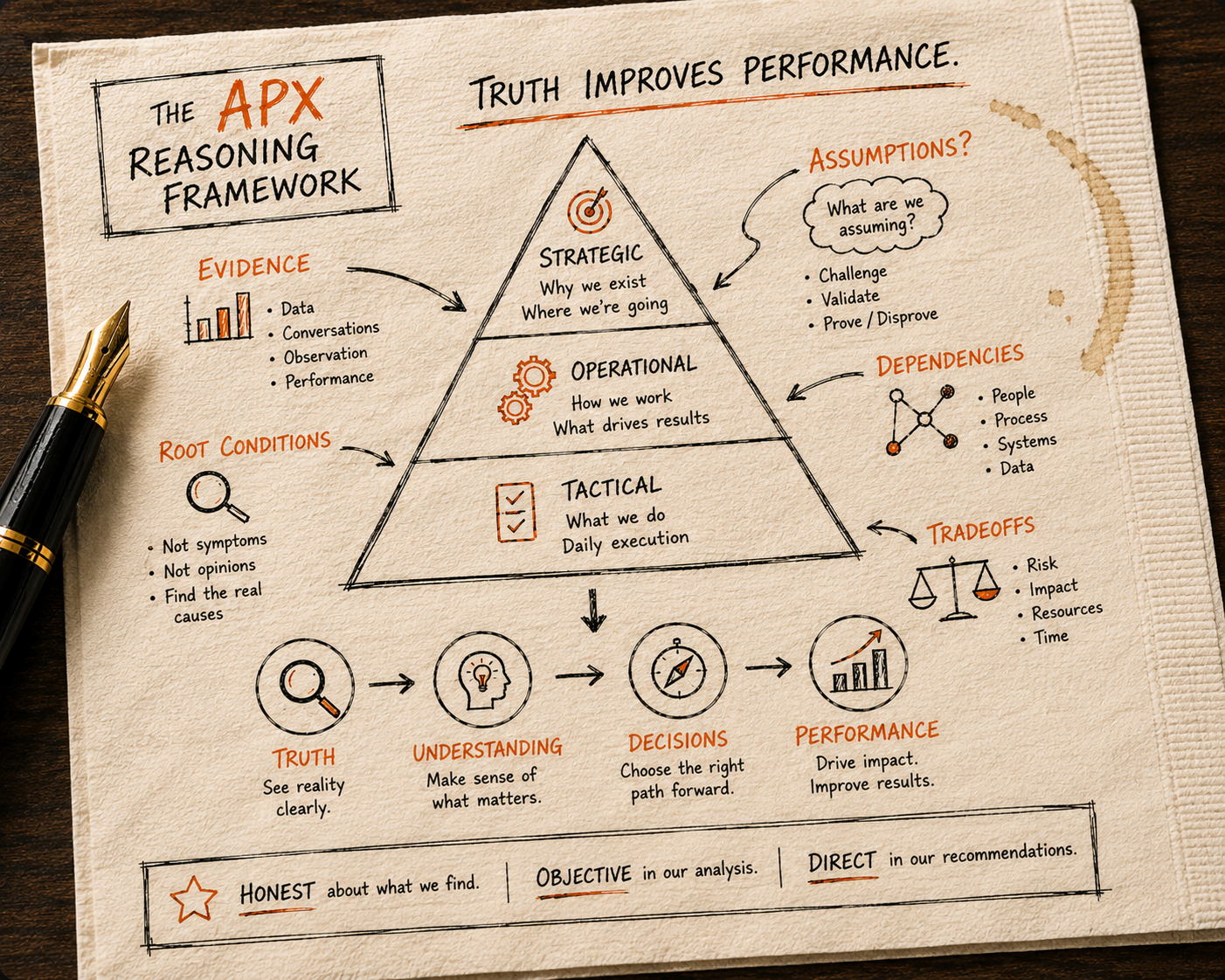
APX Reasoning Framework
Evidence, analysis, decisions, and action—in the right order.
The framework supports organizations as they move from current reality to informed action. It distinguishes evidence from assumptions, clarifies root conditions and surface symptoms, and connects strategic intent with operational and tactical execution.
Honest, objective, and direct reasoning governs each stage.
Guiding principles
How the work is conducted
-
Evidence precedes recommendations
Relevant information is gathered and evaluated with stakeholders before action is proposed. Recommendations follow from what the evidence supports—not from a preferred method, product, or predetermined conclusion.
-
Analysis precedes intervention
When organizational results are not meeting expectations, contributing conditions are clarified with leadership teams before recommending where and how to intervene.
-
Recommendations remain vendor neutral
Advice is based on what best serves the organization’s objectives. Findings are not shaped around a product sale, preferred vendor, or proprietary solution.
-
Technology supports reasoning
Tools can strengthen evidence collection, analysis, and decision support. They are useful when they improve the quality of reasoning—not when they replace it.

Ready to get results
Ready to understand what is getting in the way?
Share what the organization is seeing, what result it needs, and where progress has stalled. APX will help determine the appropriate next step.
Get Results →