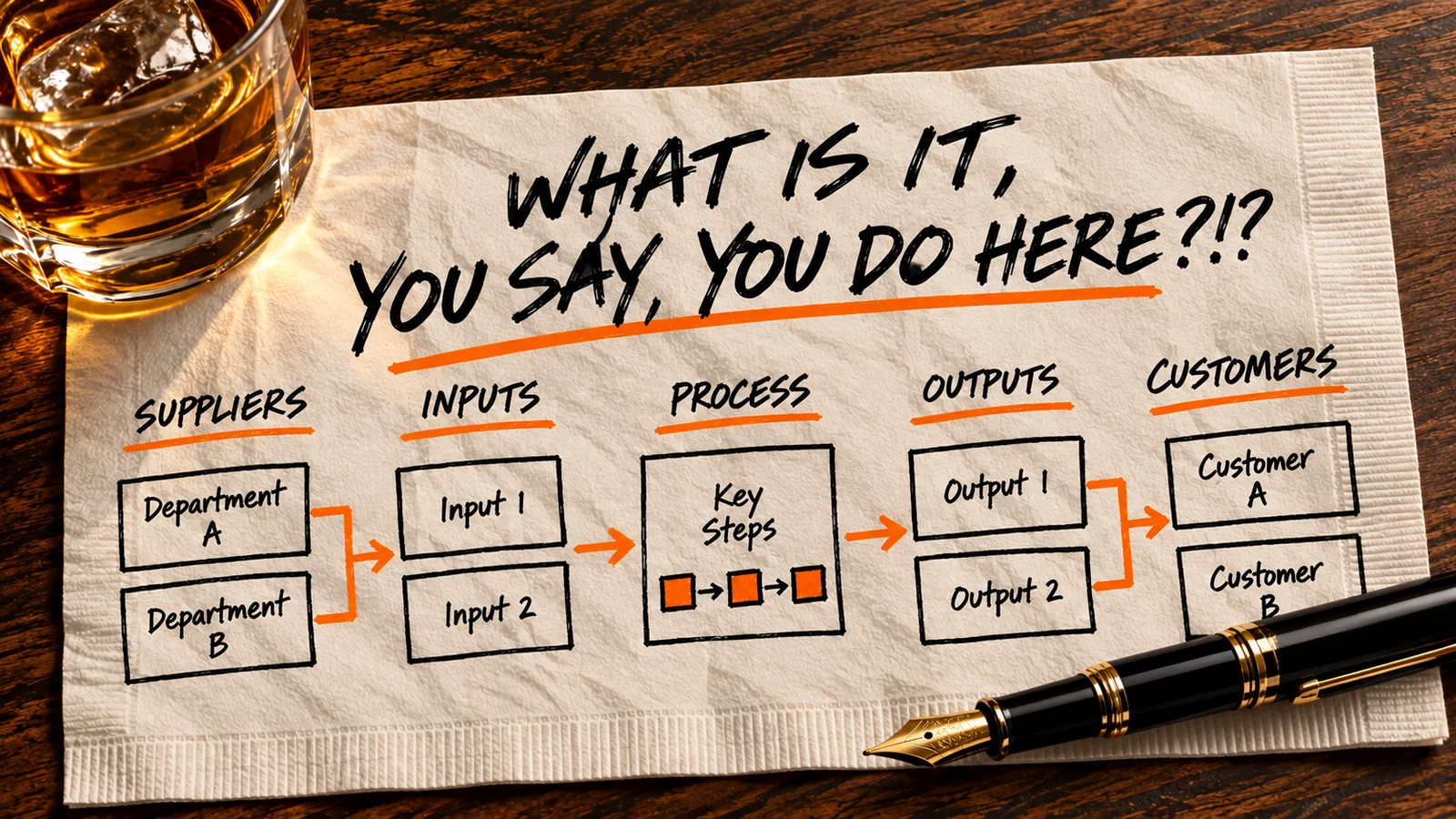
Last post we discussed leveraging a Six Sigma tool known as SIPOC to outline an organization’s high-level products and services. We intentionally left out the Process (P) portion because at the initial stages, we want to ensure we stay at the strategic/operational level and not get into the details that make up an employee’s performance. After you’ve identified several rows of products and services that your organization performs, the next logical step would be to start mapping out the processes.
When mapping out processes, you should always focus on the line items that have the biggest bang for your buck, the most juice for the squeeze, or in more professional terms, the biggest Return on Investment (ROI). Why? If you’re contracting out this effort, you’re paying a consulting firm a substantial amount of money to do this work and you most likely don’t want him/her mapping the process for producing a TPS report that no one reads.
The simplest approach to documenting a process would be to map out a “Process Flow”. This method is as simple as listing a sequence of activities in a numerical order. For example, Step 1: Log in to the HR application, Step 2: Look up all new applicants for a vacant position, Step 3: Export into Excel and Print, Step 4: etc.
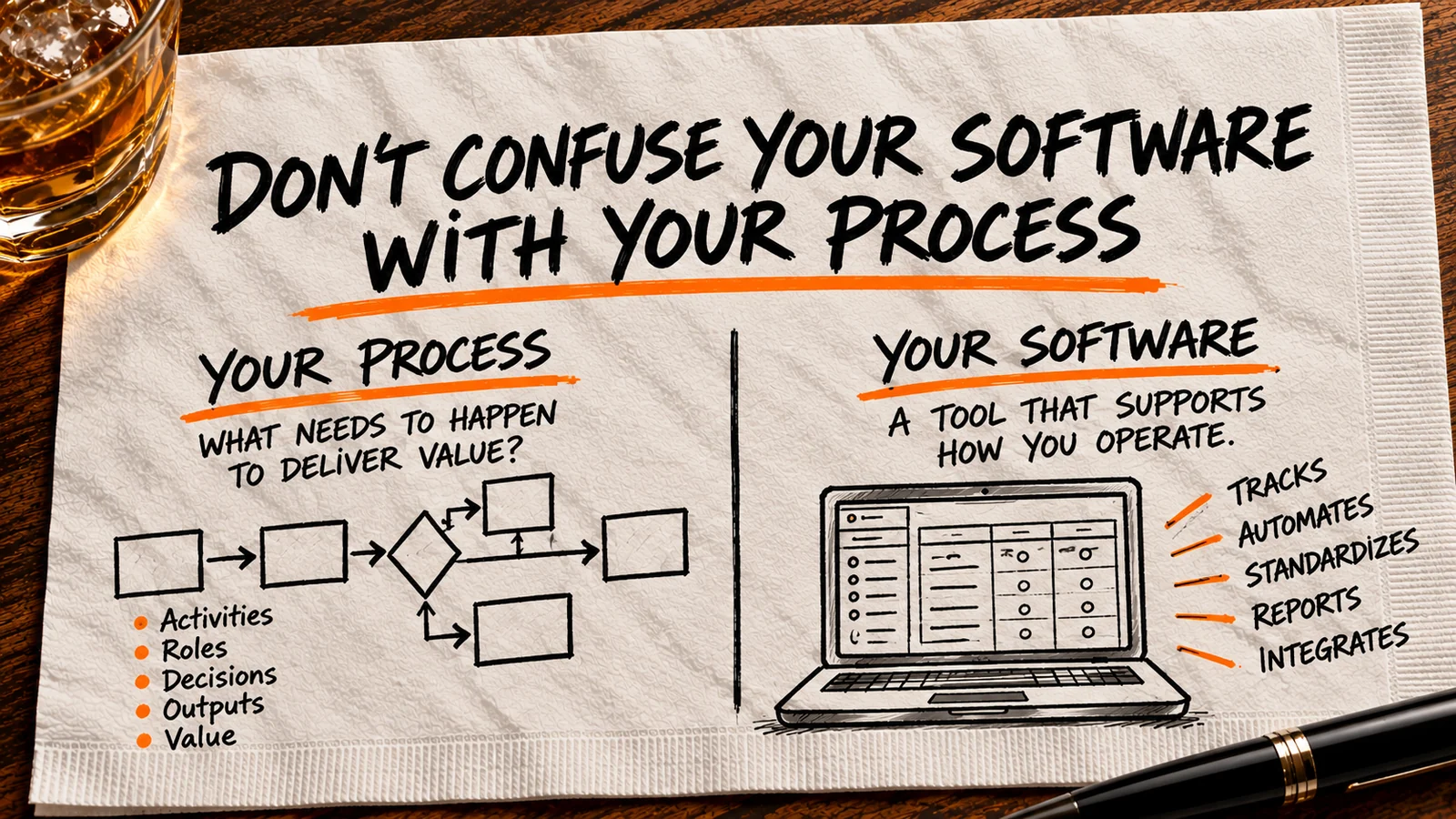
The ironic aspect with this specific example is that the particular application typically dictates the organization’s process because they purchased a commercial off-the-shelf software to optimize their business. Pause for a moment and contemplate that within your own business. Years ago, your organization had a homegrown application built to help reduce the amount of paperwork in filing cabinets and on desks. Then as companies started developing tools that helped businesses improve, your organization bought into the latest and greatest thingamajig or whatchamacallit. Now you have outdated Standard Operating Procedures (SOP) and processes because of that implementation. And further down the road that thingamajig goes through upgrades causing changes in your SOP. And to muddy the waters even more, now every whatchamacallit has integrated Artificial Intelligence (AI) causing even more deviation from a process that once made your organization great.
Regardless of the application or technological advances introduced, it’s important to understand what made your organization successful before changing the processes that support it. As you’re talking with your team to map out a process flow, I dare you to ask them to count the number of Excel files they have saved because the system the organization uses doesn’t do what they need it to do. Here’s where you start to identify areas for improvement. Did the organization know the tool had a particular functionality? Did the organization update the SOPs to leverage that particular functionality? If so, did the organization communicate that update to its employees? Did those employees review and understand those SOP changes? Are they willing to make the change or are they hell-bent on using that spreadsheet they created because it’s comfortable?
Once you hit that level of detail, typically a consultant may move from a simple process flow to a more detailed process map because there’s a need to document swim lanes, databases, decisions, etc. But in the initial phase, leveraging Process Flow will help leaders identify high-level processes that require a deeper analysis.
Final thought as you’re seeing the world altering course and speed because this new AI thingamajig is taking over… if the electricity went out or your IT systems were compromised… how would your organization perform its duties?
Truth Improves Performance.