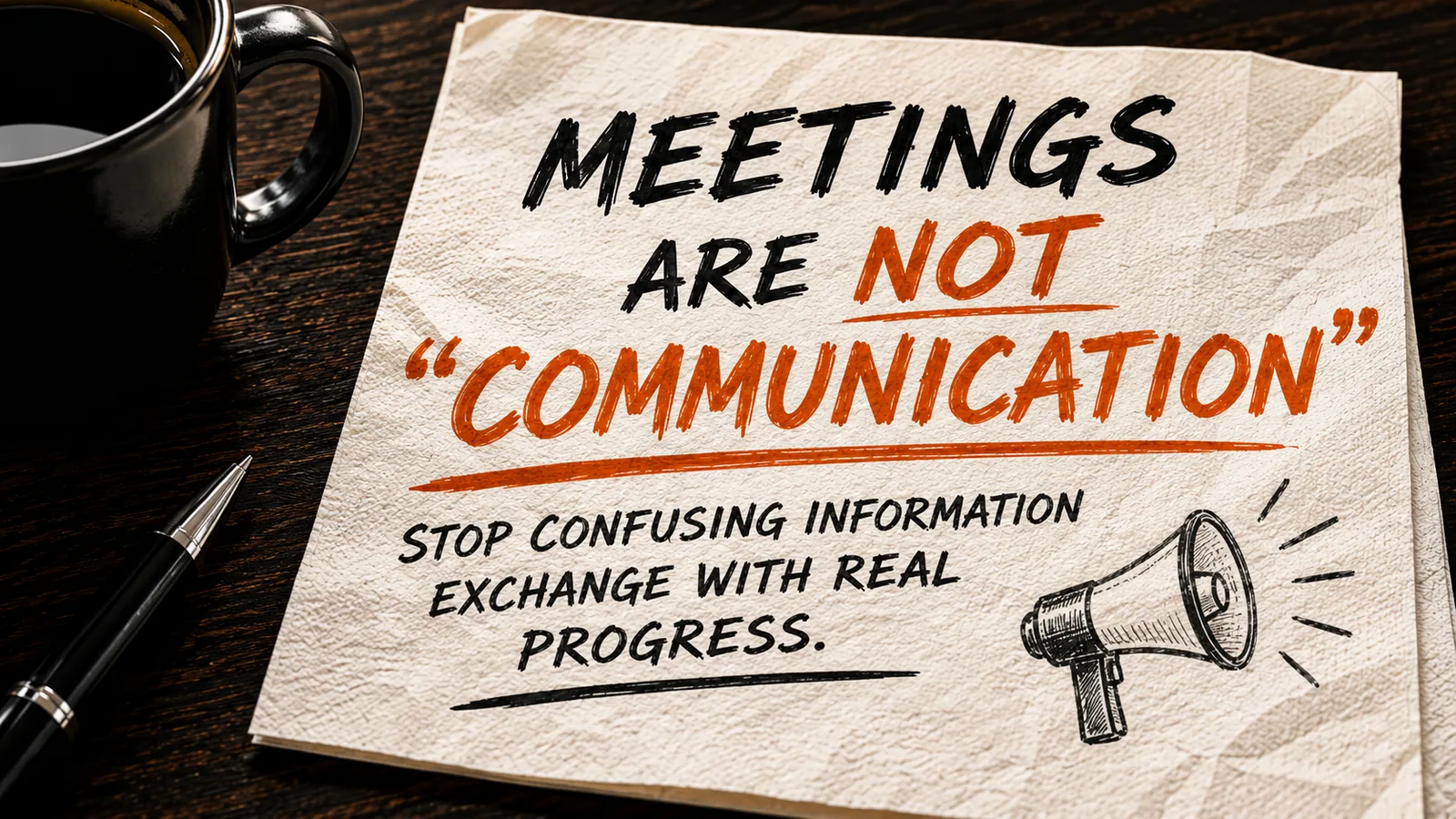
A while back, a colleague gave me a novelty mug that read, “Congrats! You survived another meeting that could have been an email.” It made me laugh because it wasn’t just funny—it was true. Too many organizations confuse meetings with communication. Leaders spend so much time moving from meeting to meeting that they have little time left to actually lead.
If the purpose of a meeting is simply to exchange information, it probably should not be a meeting. Meetings exist to create shared understanding, make decisions, solve problems, and establish accountability. Don’t get me started on how many meetings I’ve attended where the end result is a leader going around the table asking everyone, “How do you feel about that?” as if this alone will create inclusivity and buy-in for whatever the leader is pitching.
If you cannot clearly explain why you are holding a meeting, do not send the invitation.
I recommend that anyone planning a meeting apply the PACER technique to ensure the meeting runs efficiently and effectively. PACER stands for Purpose, Agenda, Code of Conduct, Expectations, and Roles. Each element should be considered long before an Outlook calendar invitation is sent.
Purpose
Start the meeting invitation by defining its purpose. This is the most critical step because it tells everyone who is invited what the desired outcome should be.
A clear purpose gives the organizer a precise understanding of what must be achieved and gives participants time to prepare. It keeps the discussion focused and helps prevent the meeting from drifting away from the reason everyone was brought together.
If you struggle to define the meeting’s purpose and desired outcomes, reconsider whether the meeting needs to happen at all.
Think about the overall cost of a one-hour meeting. Assume you invite 10 employees who earn between $80,000 and $100,000 annually. That represents approximately $380 to $480 in salary expense for a single hour that may or may not produce meaningful work.
That does not include the time spent preparing for the meeting, completing follow-up tasks, arranging logistics, or attending additional meetings because the first one failed to achieve its intended outcome.
If you are going to hold a meeting, make it worth the time and money.
Agenda
Once the purpose and desired outcomes are clear, develop the agenda.
One principle I was taught is that a good rule of thumb is to spend one hour planning for each hour of meeting time. A one-hour meeting can go off the rails quickly when there is no clear agenda or when the agenda is not followed.
Your calendar invitation already includes the date, time, and location, whether that is a conference room or virtual session. The agenda must go further. It should explain what will be discussed, how much time will be allotted to each topic, and how each participant will contribute to achieving the desired outcome.
That is not an easy task when 10 people bring different perspectives and competing priorities into the same conversation.
Include the time allotted for each agenda item and reserve a few minutes at the end to evaluate whether the meeting achieved its desired outcomes. You do not want to schedule another meeting simply because the first one failed to meet the mark.
Code of Conduct
Code of Conduct, Expectations, and Roles may be less important for short or informal meetings. However, when a meeting requires several hours or includes complex discussions, these elements become extremely helpful from a facilitation standpoint.
The Code of Conduct establishes the ground rules from the beginning.
Let participants know how the discussion will be managed and create a parking lot for issues that surface but do not directly contribute to the meeting’s intended outcome. Those issues may still require attention later, but they should not derail the current conversation.
The last thing you want is to find yourself in a Lord of the Flies scenario.
Expectations
The Expectations portion of PACER tells participants what they need to do before the meeting.
They may need to review a strategic plan, standard operating procedure, financial report, survey result, or other data necessary to support the discussion.
Whatever the requirement may be, participants should know what they are expected to bring to the table before the meeting begins.
Roles
The final element is Roles.
Who is in charge? Who is facilitating? Will the meeting end with a vote? Does someone need to serve as the recorder? Who will keep the group on time?
From my experience, it is easy to get caught up in the discussion and lose track of time. Appointing someone as the timekeeper helps ensure the agenda does not get off track.
A co-facilitator can also document parking lot items, capture decisions, and help monitor participation. A meeting can become a shared team effort when participants are assigned meaningful roles.
Do not make the planning process more complicated than the meeting requires. The goal is to lead the team as efficiently as possible, not to create unnecessary administrative work.
At the same time, stop investing your team’s time in meetings that do not produce meaningful progress.
Before scheduling your next meeting, ask one question:
What decision, solution, accountability, or shared understanding should exist when we leave the room?
If you cannot answer that, do not send the invitation.
Truth Improves Performance.